
EAST AI Hydraulic Manufacturer
Since 2006
Views: 0 Author: ALEX Publish Time: 2026-07-13 Origin: Site
A purchasing engineer received two quotations for what appeared to be almost the same product.Both suppliers offered seamless steel tubes.Both specified similar material grades.Both claimed their products were suitable for hydraulic cylinder manufacturing.One quotation was noticeably lower.The decision seemed straightforward.Several weeks later, production began.The lower-cost tube required additional boring before honing.Machining time increased.Tool wear became more noticeable.Production costs gradually exceeded the original savings achieved during purchasing.The material met the specification.The purchasing decision did not meet the manufacturing objective.
Choosing the right tube is not simply about buying steel. It is about selecting the right manufacturing starting point.
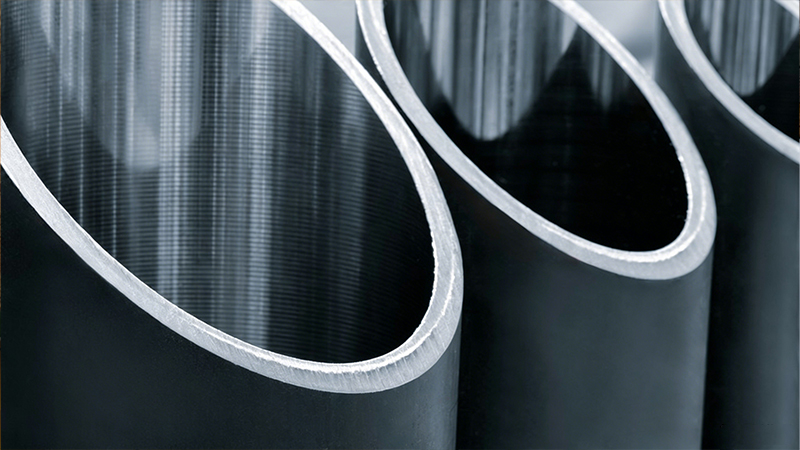
DOM stands for Drawn Over Mandrel.The process begins with an electric resistance welded tube that is cold drawn over a mandrel to improve dimensional accuracy and mechanical properties.Compared with standard welded tubing, DOM tubes generally offer:
Better dimensional consistency
Improved concentricity
Higher strength
A smoother internal surface than ordinary structural tubing
Because of these characteristics, DOM tubing is widely used in mechanical structures, automotive components, agricultural equipment, and some hydraulic applications where the internal bore will be machined later.However, DOM tubing is not produced with the same internal bore requirements as a finished honed tube.That distinction becomes important when manufacturing hydraulic cylinders.
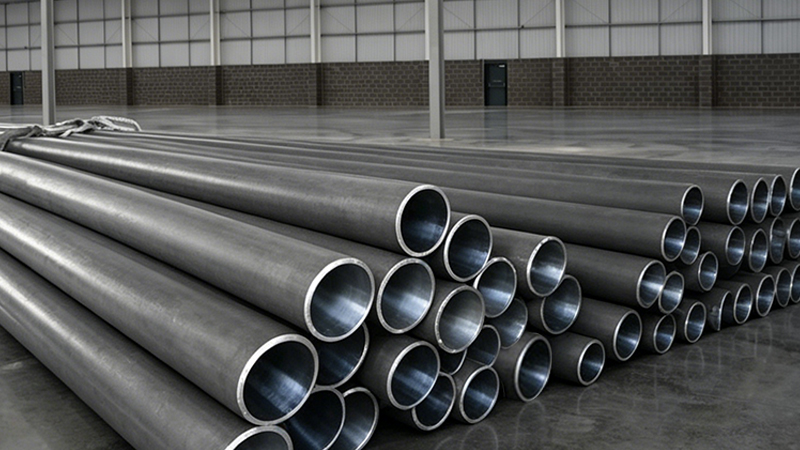
A Honed Tube is typically manufactured from a precision cold drawn or seamless steel tube before undergoing a honing or skiving and roller burnishing process to produce a highly controlled internal bore.Unlike a standard mechanical tube, the focus is not only on external dimensions but also on the quality of the internal surface.Depending on application requirements, honed tubes are produced to achieve controlled bore tolerances and surface finishes suitable for hydraulic sealing systems.
These characteristics help reduce additional machining before cylinder assembly and improve manufacturing efficiency.The purpose of honing is not simply to make the bore smoother. It is to create a predictable surface for sealing performance and repeatable production.
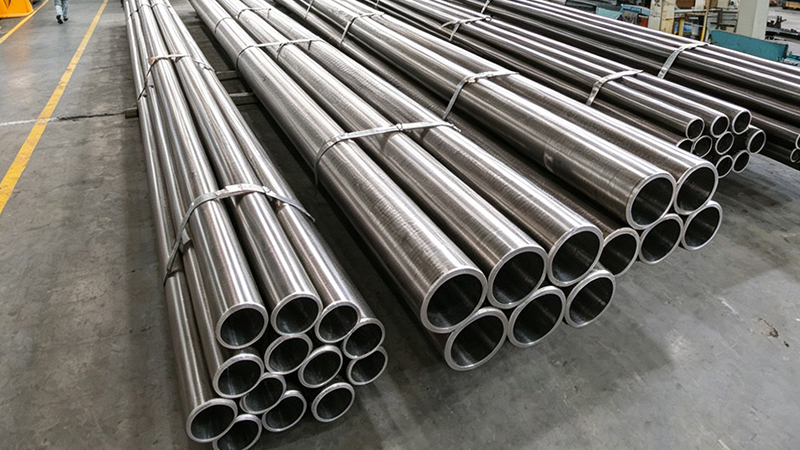
Many purchasing decisions focus on price.Experienced engineers usually focus on manufacturing requirements.The following comparison highlights where these products differ in practical hydraulic cylinder production.
Comparison | DOM Tube | Honed Tube |
|---|---|---|
Internal Bore | Precision drawn but usually requires further machining | Finished or near-finished bore ready for cylinder production |
Surface Finish | Smoother than standard tubing but not honed | Controlled surface finish designed for hydraulic sealing |
Additional Machining | Often required | Usually minimal |
Typical Application | Mechanical structures and components | Hydraulic cylinders and fluid power equipment |
Manufacturing Efficiency | Depends on subsequent machining | Designed to reduce production time |
Both products have value. The correct choice depends on the manufacturing objective rather than the purchase price.
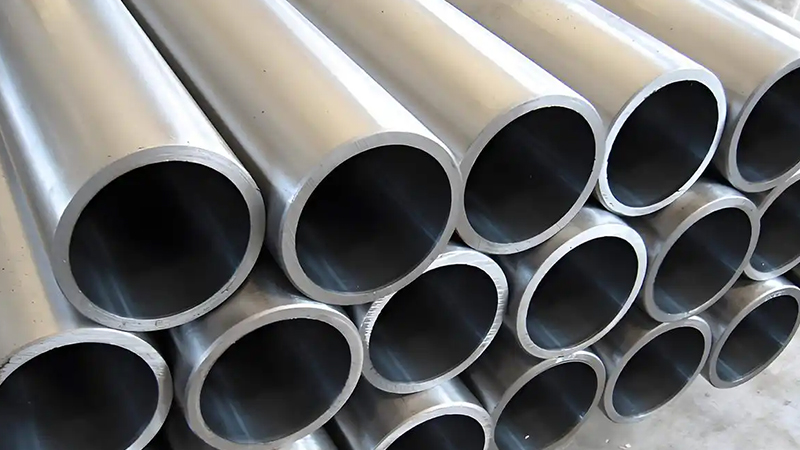
DOM tubing remains an excellent engineering solution in many situations.It is commonly selected when manufacturers intend to perform additional machining operations or when the component does not require a finished hydraulic-grade internal bore.Typical applications include:
Structural mechanical components
Automotive parts
Agricultural machinery
Fabricated equipment
Components requiring subsequent internal machining
For these applications, DOM tubing often provides an effective balance between dimensional accuracy and manufacturing flexibility.Choosing DOM tubing is not a compromise—it is the right decision when the application matches its design purpose.
While DOM Tubes perform well in many mechanical applications, they are not always the most efficient starting material for hydraulic cylinder manufacturing.Hydraulic cylinders rely on precise interaction between the cylinder bore, piston seals, and hydraulic fluid. The internal surface is not simply a dimension—it is a functional surface that directly affects sealing performance, friction, and service life.
For manufacturers producing hydraulic cylinders on a regular basis, Honed Tubes are often selected because they help reduce secondary machining and provide a controlled internal bore suitable for hydraulic applications.Typical situations where a Honed Tube offers clear advantages include:
Manufacturing hydraulic cylinders for OEM equipment
High-volume production requiring consistent machining performance
Applications with demanding bore tolerance requirements
Projects where reducing machining time improves overall efficiency
Production environments focused on repeatability and quality consistency
Choosing a honed tube is not about buying a more expensive product. It is about eliminating unnecessary manufacturing steps.
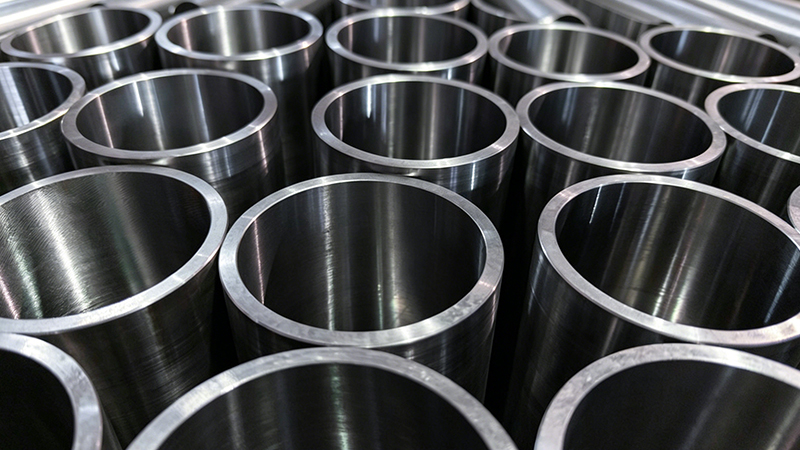
One of the most common purchasing mistakes is comparing DOM Tubes and Honed Tubes using only the quotation.The purchase price is easy to measure.The manufacturing cost is not.
A lower-cost tube may require additional boring, honing, cleaning, inspection, and machining before it reaches the same production stage as a finished honed tube.These additional operations consume machine capacity, operator time, tooling, and production planning resources.For manufacturers producing hundreds or thousands of cylinders each year, those hidden costs often exceed the initial material savings.The right comparison is not cost per tube—it is cost per finished hydraulic cylinder.
Assuming DOM tubes and honed tubes are interchangeable.
Comparing quotations without considering additional machining requirements.
Selecting material based solely on the lowest unit price.
Ignoring production efficiency when evaluating raw materials.
Assuming every hydraulic cylinder requires the same tube specification.
Most purchasing problems begin long before production starts.They begin with selecting material that does not match the manufacturing process.Material selection should support production efficiency—not create additional work.
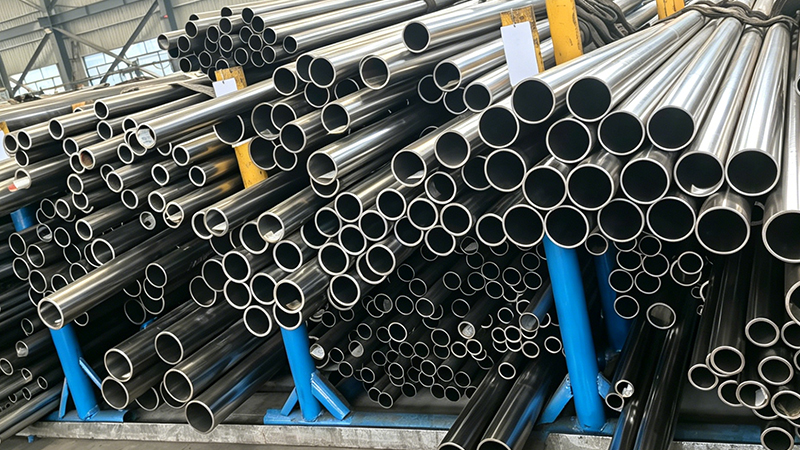
The following guide can help engineers and purchasing teams choose the most suitable option.
Your Manufacturing Situation | Recommended Choice |
|---|---|
Producing finished hydraulic cylinders | Honed Tube |
Manufacturing structural mechanical components | DOM Tube |
Planning additional internal machining | DOM Tube |
Seeking to reduce machining operations | Honed Tube |
Stable OEM cylinder production | Honed Tube |
Prototype or general mechanical fabrication | DOM Tube |
The objective is not to determine which product is universally better.It is to select the material that best supports your manufacturing objectives.Good engineering is about choosing the right solution—not the same solution every time.
The best tube is not determined by its price or appearance. It is determined by how well it supports the job it was designed to perform.Choosing between a DOM Tube and a Honed Tube is not about deciding which product is superior.It is about understanding the manufacturing process, the application requirements, and the total cost of producing a reliable hydraulic cylinder.
Continue expanding your hydraulic manufacturing knowledge:
Honed Tubes (Internal Link → Product Page)
Chrome Plated Rods (Internal Link → Product Page)
Choosing the Right Honed Tube Length: A Small Decision That Can Reduce Manufacturing Costs (Internal Link → Related Blog)
When a Honed Tube Passes Inspection but Still Creates Production Problems (Internal Link → Related Blog)
Before Requesting a Quote: Five Technical Details That Save Weeks of Production Time (Internal Link → Related Blog)
Yes. Some manufacturers use DOM Tubes as starting material and perform additional machining or honing to achieve the required bore quality. Whether this approach is appropriate depends on the production process and application requirements.
Not necessarily. Honed Tubes can be manufactured from different types of precision tubing depending on the required specification and production process. Buyers should evaluate the complete technical specification rather than relying on one manufacturing method alone.
Because they provide a controlled internal bore that helps support sealing performance, dimensional consistency, and efficient cylinder manufacturing.
For manufacturers requiring a finished hydraulic cylinder bore, Honed Tubes generally reduce the amount of internal machining compared with tubes that require additional processing.
No. Material selection should also consider machining requirements, production efficiency, tooling, lead time, and the total cost of manufacturing the finished hydraulic cylinder.
Start with the application rather than the quotation. Consider whether the component requires a finished hydraulic-grade bore, how much machining will follow, and how the material affects total production efficiency.
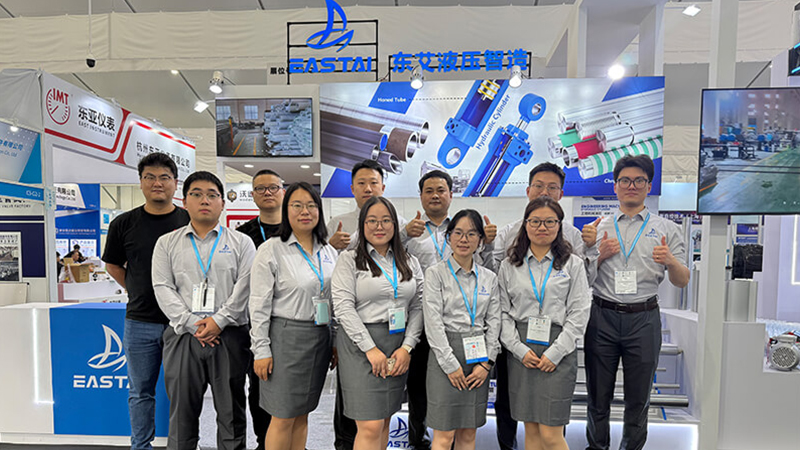
Selecting between a DOM Tube and a Honed Tube is not simply a purchasing decision—it is a manufacturing decision that influences machining efficiency, production cost, and hydraulic cylinder performance.
At EAST AI, we manufacture Honed Tubes and Chrome Plated Rods for hydraulic cylinder applications with a strong focus on dimensional consistency, controlled bore quality, and stable batch-to-batch production. If your team is comparing material options for a new project or reviewing manufacturing efficiency, we’re happy to discuss practical solutions based on your application, production process, and engineering requirements rather than recommending a one-size-fits-all approach.


