
EAST AI Hydraulic Manufacturer
Since 2006
Views: 0 Author: ALEX Publish Time: 2026-07-14 Origin: Site
The phone call came only four months after the equipment entered service.A hydraulic cylinder had failed unexpectedly during normal operation.The first assumption was familiar.The material must have been defective.The engineering team reviewed the inspection records.The chemical composition complied with the specified material grade.Mechanical properties met the required standard.Dimensional inspection showed no abnormalities.
The Hydraulic Cylinder Barrel had passed every incoming inspection.Yet the cylinder still failed.The investigation revealed an important lesson.Meeting a material specification does not automatically guarantee reliable field performance.The steel was not the problem.The application was.
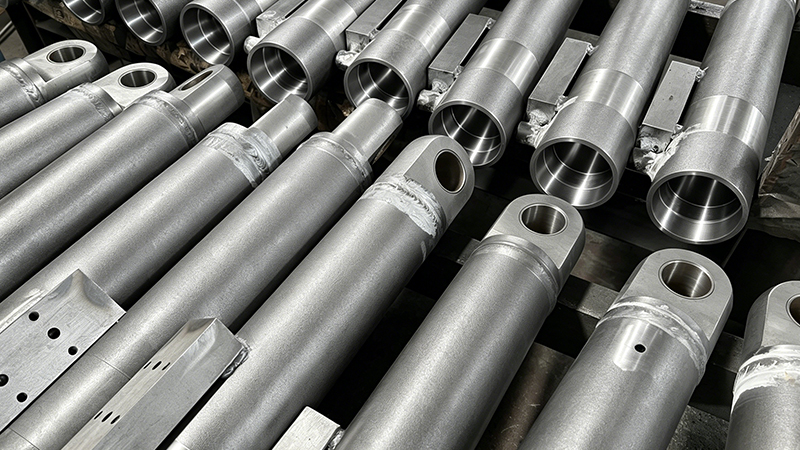
Engineering drawings define minimum requirements.Material certificates confirm compliance.Inspection reports verify dimensions.These documents are essential, but they represent only one part of a hydraulic cylinder’s performance.
A Hydraulic Cylinder Barrel operates under dynamic conditions that cannot be fully described by a material certificate.Pressure changes continuously.Loads vary during operation.Side forces develop unexpectedly.Temperature fluctuations influence seals, lubrication, and component movement.
Even a perfectly manufactured cylinder barrel can experience premature failure if the operating conditions exceed the original design assumptions.Material quality is the foundation of reliability, but application conditions determine service life.
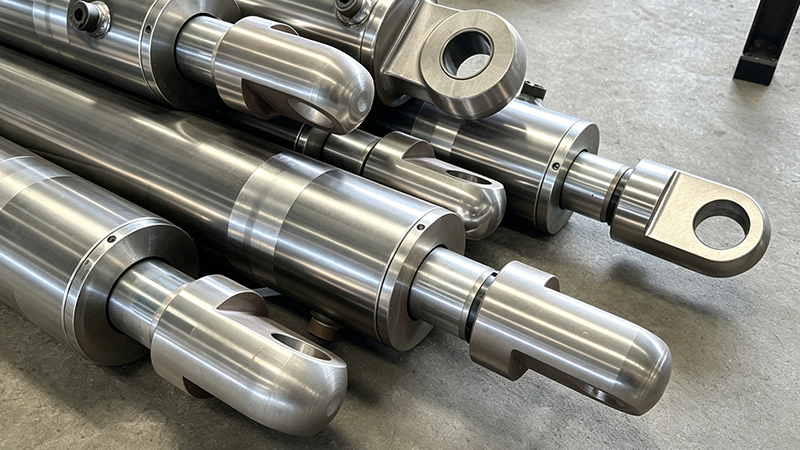
Hydraulic cylinders are designed primarily to withstand axial forces.When external side loads are introduced, stress distribution changes significantly.Instead of moving smoothly along the cylinder axis, the piston and rod apply additional force against one side of the barrel.Over time, this uneven loading accelerates wear inside the bore and increases stress concentrations within the cylinder structure.Many cylinder failures initially blamed on material quality are ultimately traced to improper loading conditions.Even high-quality materials cannot compensate for poor load alignment.
Hydraulic systems rarely operate at one constant pressure.Rapid valve movements.Unexpected impacts.Sudden load changes.All of these can generate short-duration pressure spikes far above the system’s nominal working pressure.Although these pressure peaks may last only fractions of a second, repeated exposure gradually increases fatigue damage within the Hydraulic Cylinder Barrel.The cylinder may satisfy every design requirement under normal operating pressure while still experiencing accelerated fatigue under repeated pressure shocks.Designing only for average pressure without considering transient loads often leads to unexpected service issues.
Wall thickness is frequently underestimated during cylinder design.Selecting a thinner barrel may reduce material cost and overall weight, but it also reduces structural rigidity.Under repeated high-pressure cycles, insufficient wall thickness can increase elastic deformation and contribute to long-term fatigue.Conversely, choosing an excessively thick wall does not always improve performance.It increases weight, machining time, and material cost without necessarily solving the actual engineering problem.Proper wall thickness should always be determined through engineering calculations rather than assumptions.
Even a well-designed Hydraulic Cylinder Barrel can experience abnormal stress if the cylinder is installed incorrectly.Misaligned mounting points, uneven support structures, or excessive side forces cause the piston rod to deviate from its intended centerline.Instead of distributing pressure evenly around the bore, contact forces become concentrated in specific areas. Over thousands of operating cycles, this localized loading accelerates wear on the bore surface, increases seal friction, and may eventually contribute to premature barrel deformation.Installation errors are often overlooked because they are not visible during incoming inspection.A correctly manufactured cylinder can still fail if it is installed under incorrect alignment conditions.
A cylinder barrel does not have to be damaged during operation to create future problems.Improper storage, careless transportation, or rough handling before assembly can introduce scratches, dents, or contamination inside the bore.These small defects may appear insignificant during visual inspection, yet they can damage seals during the first few operating cycles or interrupt the formation of a stable oil film between the seal and the bore.Because hydraulic systems rely on extremely smooth internal surfaces, even minor imperfections may shorten service life.Protecting the bore before assembly is just as important as machining it correctly.
Meeting the specified material grade does not automatically mean the material is appropriate for every operating environment.Two hydraulic cylinders may both comply with the same engineering drawing while working under completely different conditions.One may operate indoors with moderate pressure.Another may experience continuous shock loading, abrasive contamination, or extreme temperature variations.
Although the material technically satisfies the specification, the application may require a different steel grade, greater wall thickness, improved surface treatment, or additional design considerations.Engineering standards establish minimum requirements. Real operating conditions determine long-term performance.
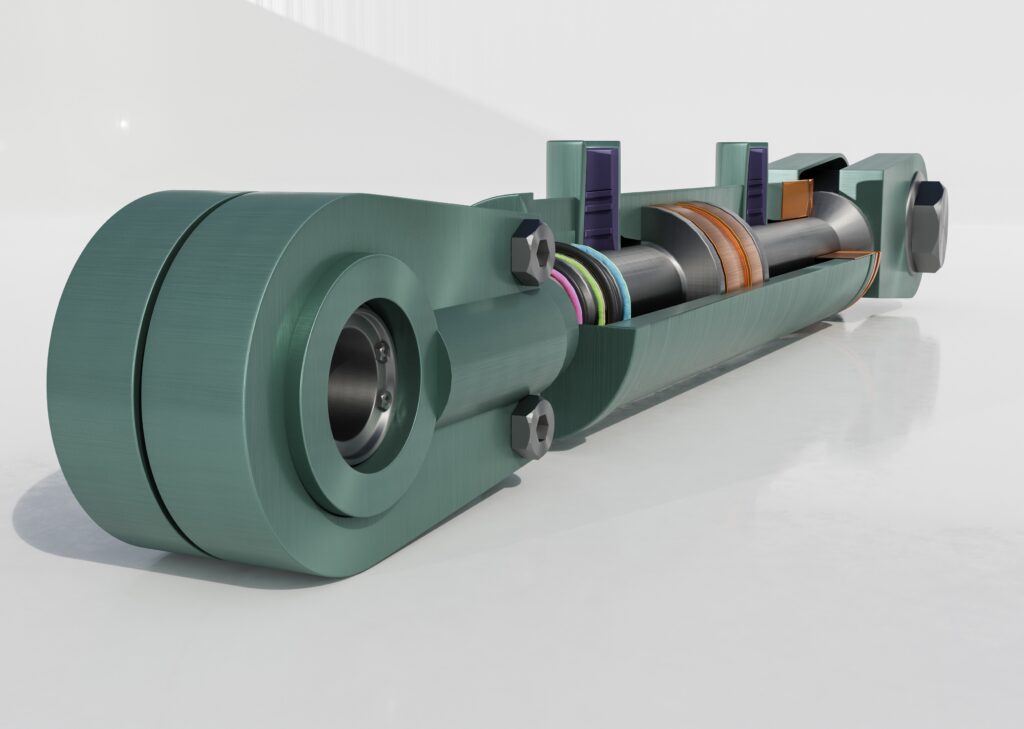
When a hydraulic cylinder barrel fails, experienced engineers rarely begin by blaming the material.Instead, they follow a structured investigation process that examines every stage of the product’s lifecycle.
Investigation Area | Questions Engineers Ask |
|---|---|
Material Verification | Did the material meet the specified grade and mechanical properties? |
Dimensional Inspection | Were bore size, straightness, and wall thickness within specification? |
Operating Conditions | Did actual pressure and loading match the design assumptions? |
Installation | Was the cylinder installed with proper alignment and support? |
Maintenance | Were contamination, lubrication, and service intervals properly controlled? |
Failure Pattern | Is the damage consistent with overload, fatigue, wear, or external impact? |
Following a systematic process helps distinguish between manufacturing issues, application errors, and operational factors.Accurate root cause analysis prevents repeated failures. Replacing parts without understanding the cause rarely solves the problem.
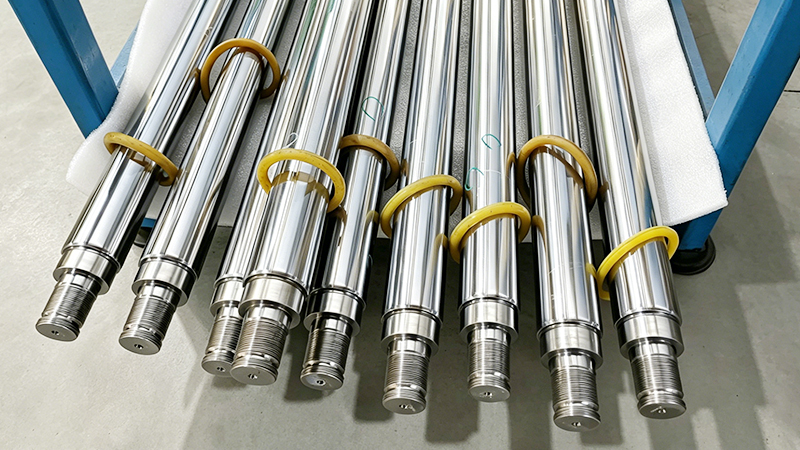
Continue exploring hydraulic cylinder manufacturing and reliability:
Honed Tubes (Internal Link → Product Page)
Chrome Plated Rods (Internal Link → Product Page)
DOM Tube vs. Honed Tube: Which Is Better for Hydraulic Cylinders? (Internal Link → Related Blog)
Five Details Experienced Buyers Check Before Approving Honed Tubes (Internal Link → Related Blog)
Yes. Material certification confirms compliance with specified standards, but cylinder performance is also influenced by design, loading conditions, installation accuracy, and maintenance practices.
There is rarely a single cause. Side loading, pressure spikes, incorrect wall thickness, installation misalignment, contamination, and unsuitable application conditions frequently contribute together.
Not necessarily. Higher-strength materials cannot compensate for improper design, excessive loading, or installation problems. Material selection should always match the intended application.
Review the complete system rather than focusing only on the material. Proper design calculations, controlled manufacturing, correct installation, routine maintenance, and operating within design limits all contribute to longer service life.
Yes. Scratches, contamination, or corrosion inside the barrel before assembly can affect sealing performance and increase wear once the cylinder enters service.
Immediately after the failure is identified. Collecting operating data, inspecting damaged components, and documenting conditions early helps engineers identify the true root cause more accurately.
This guide is valuable for:
Hydraulic cylinder design engineers
OEM equipment manufacturers
Purchasing managers evaluating cylinder components
Maintenance engineers investigating equipment failures
Quality engineers responsible for root cause analysis
Understanding why a Hydraulic Cylinder Barrel fails requires more than reviewing a material certificate. Long-term reliability depends on the combined effects of engineering design, manufacturing quality, operating conditions, and maintenance.
At EAST AI, we manufacture Honed Tubes, Chrome Plated Rods, and hydraulic cylinder components with a focus on dimensional consistency, controlled manufacturing processes, and stable batch quality. If your team is evaluating a cylinder design, investigating a field failure, or selecting materials for a new project, our engineering specialists can help you review the technical factors that influence long-term hydraulic cylinder performance.


